At DGSOL, we specialize in creating AI-powered digital marketing solutions tailored to your goals and scalable to meet them. In this guide, we will help you understand what an AI content marketing strategy is, how it differs from traditional methods, and how to build one that is effective and easy to implement.
What Is a Digital Marketing Strategy?
A digital marketing strategy is a guide that tells how your business will utilize digital channels, such as SEO, content marketing, social media, email marketing, and paid advertising, to achieve its objectives. Every component of your digital strategy should align with your brand, audience, and budget. For example, an e-commerce store may focus on Facebook Ads, Google Shopping campaigns, and retargeting emails to increase conversions.
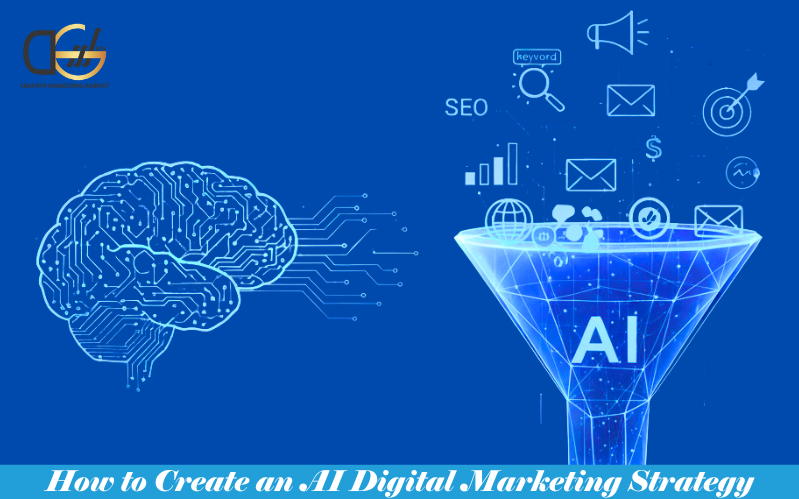
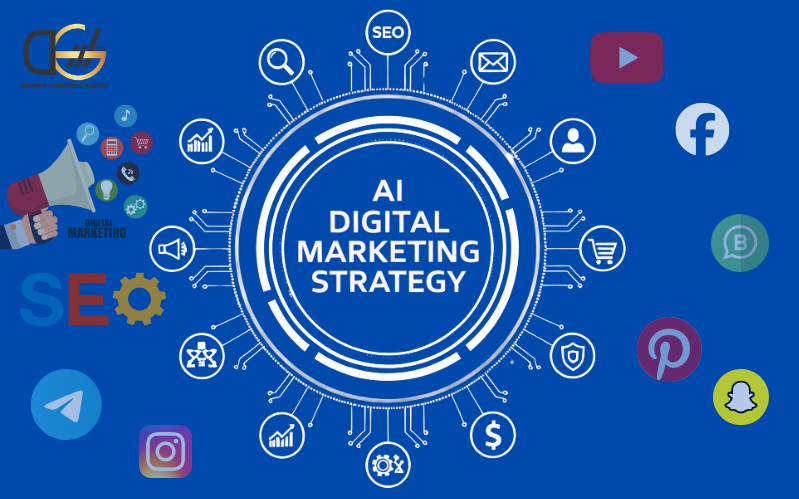
What Is an AI Digital Marketing Strategy?
An AI-driven digital marketing strategy leverages artificial intelligence to automate tasks, predict behavior, and optimize campaigns in real-time. It’s a smarter, faster, and more personalized approach to digital marketing.
AI strategy includes schedules to know which is in action:
- Automating bid adjustments for Google Ads or Meta ad campaigns.
- Delivering tailored product suggestions in e-commerce.
- Analyzing sentiment from social media to improve messaging.
Traditional vs. AI Digital Marketing Strategies
Traditional marketing often relies on manual planning and guesswork. AI, on the other hand, brings efficiency through a proper planning and execution process:
- Efficiency: Automates repetitive tasks.
- Accuracy: Provides deep data insights.
- Scalability: Delivers personalized content at scale.
How to Create an AI Digital Marketing Strategy
Here are step-by-step guidelines about how to create an AI digital marketing strategy for your brand’s growth and development.
1. Define Your Goals
Start by defining your goals with clear objectives, whether you aim to increase conversions, reduce cart abandonment, or enhance lead generation. Your goal will inform your selection of AI tools and campaign strategy.
2. Audit Your Current Strategy
Use analytics tools to assess what is working and what is not. Identify the loopholes and gaps, such as underperforming ads or inefficient manual tasks. Google Analytics and SEMrush are excellent tools for auditing your current business strategy.
3. Choose the Right AI Tools
Choose AI platforms with the right digital marketing tools that align with your marketing goals:
- Chatbots (e.g., Drift) for 24/7 customer support.
- Predictive Analytics (e.g., Salesforce Einstein) for trend forecasting.
- Content Generators (e.g., Jasper) for SEO-optimized blog content.
4. Integrate AI into Your Workflow
Train your team and embed AI tools into your daily operations. For example, utilize AI-driven automation to manage email marketing, allowing your marketing team to concentrate on content creation and strategy.
5. Personalize at Scale
You can utilize AI to deliver personalized experiences tailored to user behavior, from e-commerce product suggestions to targeted LinkedIn ads for B2B, personalization boosts engagement and conversion.
6. Monitor and Optimize
AI tools offer real-time insights that help you refine your campaigns. For campaign tracking, you need to analyze the key metrics, such as click-through rate, return on investment, and customer retention, to make informed, data-driven adjustments.
7. Overcome Challenges with Innovative Solutions
AI strategies can face challenges when trying new marketing approaches, which may sometimes benefit your business, but not always. The challenges are:
- Data Privacy: Comply with GDPR and CCPA regulations.
- Tool costs: Start with budget-friendly platforms like HubSpot.
- Data accuracy: Regularly clean your data with tools like Tableau.
AI Digital Marketing Strategy Challenges for Long-Term Success
- Data Quality: Clean your data with tools like Tableau.
- Affordability: Start small with free trials or cost-effective options.
- Adaptability: Provide training for your team to ensure seamless AI integration.
For Examples:
- E-commerce Brand Success.
A fashion brand used AI to analyze browsing patterns. It was discovered that video viewers were three times more likely to make a purchase. The brand began auto-generating video ads for users’ intent, resulting in a 40% increase in sales.
- B2B SaaS Lead Scoring
A SaaS company used AI to track user activity across its website and email campaigns. High-engagement leads were automatically flagged for follow-up, resulting in a 25% reduction in sales.
Tools used to make an efficient AI digital marketing strategy
There are various AI marketing tools available to craft a practical digital marketing approach that aligns with your brand objectives.
- Customer Analytics: IBM Watson
- Ad Optimization: WordStream
- Content Creation: Copy.ai
- Email Marketing: Phrasee
- CRM Integration: HubSpot AI
- Predictive Analytics: Salesforce Einstein
- Social Media Insights: Sprout Social
- Visual Creation: Canva AI
- Personalization Engine: Dynamic Yield
- Data Visualization: Tableau
Final Thoughts
Adopting an AI-driven digital marketing strategy doesn’t have to be overwhelming; it can help you achieve your brand objectives. By combining human creativity with AI’s powerful marketing tools, you can craft strategies that are efficient, scalable, and results-driven. At DGSOL, we help businesses like yours build AI-powered strategies tailored for e-commerce and B2B business success.
Do you want to transform your marketing strategy with AI automation? Contact DGSOL creative digital marketing agency in UK, today and discover a more innovative way to market!