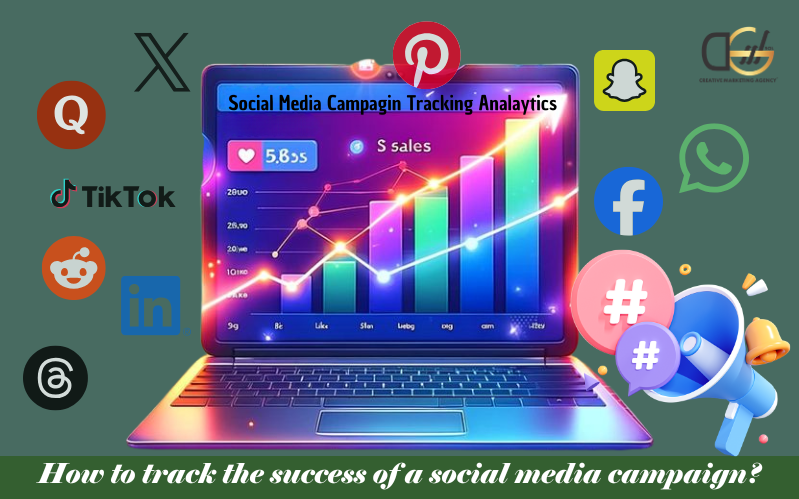
If you do not properly track campaign analytics, you risk wasting budget, missing growth opportunities, and making decisions based on assumptions instead of insights. At DGSOL, we help UK businesses to monitor social media campaigns strategically, so every post, ad, and engagement translates into measurable growth. In this guide, you will learn exactly how to track social media campaign success using KPIs, analytics tools, ROI tracking, and competitor analysis.
How to Track Social Media Campaign Success
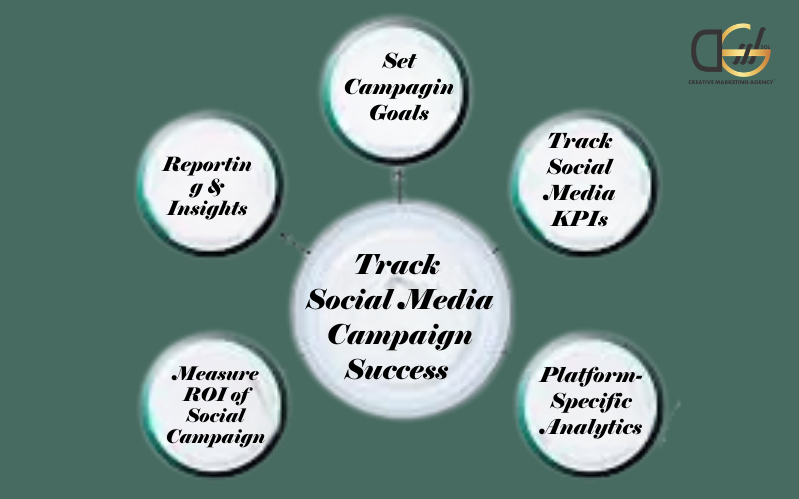
To successfully track your social media performance using key metrics and generate detailed monthly reports to improve your success rate. At DGSOL, we combine these elements into a single, structured tracking framework that helps UK businesses scale confidently.
Step 1: Set SMART Goals
Before you monitor your campaign performance results, define SMART goals: specific strategies, measurable, achievable, relevant, and time-bound. Clear objectives ensure your campaign tracking aligns with real business outcomes.
Example Goals:
| Goal Type | Metric to Track |
| Brand Awareness | Reach, impressions, brand mentions |
| Engagement | Likes, comments, shares, saves |
| Website Traffic | CTR, sessions |
| Lead Generation | Conversion rate, cost per lead |
| Sales | Revenue, ROI, cost per acquisition |
Step 2: Track Core Social Media KPIs
To properly track social media campaign effectiveness, focus on these critical metrics:
- Engagement Rate
Measures how actively your audience interacts with content.
Formula: (Likes + Comments + Shares) ÷ Total Followers × 100
- Reach vs Impressions
Reach – Unique users who saw your content.
Impressions – Total number of times content was displayed.
- Click-Through Rate (CTR)
Indicates how effectively your content drives traffic.
- Conversion Rate
Measures how many users complete a desired action.
- Follower Growth Rate
Tracks long-term audience expansion and brand growth.
Pro Tip: When you track social media campaign metrics inside one dashboard, it becomes easier to identify trends and optimise performance.
Step 3: Platform-Specific Tracking Campaigns
To effectively track social media campaign success, analyse platform-specific insights:
- Facebook & Instagram: CTR, cost per result, frequency, conversions
- LinkedIn: Lead form completions, engagement metrics, cost per lead
- TikTok: Video completion rate, average watch time, conversion tracking
We integrate platform-specific social media with website data to deliver a comprehensive view of marketing campaign results.
Step 4: Use UTM Parameters
One of the biggest mistakes businesses make is failing to use UTM tracking. Without it, you cannot accurately track campaign traffic and conversions.
Example UTM URL:
https://example.com?utm_source=facebook&utm_medium=social&utm_campaign=summer_sae
Key UTM Tags:
- utm_source – e.g., Facebook, LinkedIn
- utm_medium – e.g., social, paid_social
- utm_campaign – campaign name
- utm_content – specific ad or variation
At DGSOL, we implement structured UTM frameworks to enable UK brands to accurately track social media performance attribution.
Step 5: Track Google Analytics 4 (GA4)
GA4 provides advanced tracking capabilities for businesses seeking to accurately measure social media campaign results. Steps are:
Go to Reports > Acquisition > Traffic Acquisition
Filter by Session Source/Medium to track social sessions, conversions, revenue, and assisted conversions. Using GA4 correctly ensures that, when tracking campaign performance, you measure both engagement and revenue impact. We configure GA4 tracking systems tailored to UK businesses to maximize clarity and reporting accuracy.
Step 6: Advanced Metrics to Outperform Competitors
To truly gain a competitive advantage, businesses must monitor social media performance and profitability using advanced metrics:
- Cost Per Click (CPC)
- Cost Per Acquisition (CPA)
- Customer Acquisition Cost (CAC)
- Lifetime Value (LTV)
- Return on Ad Spend (ROAS)
- Share of voice
- Social referral traffic
DGSOL’s advanced reporting dashboards help UK businesses manage social media results to track the financial performance of social media campaigns, not just surface-level engagement.
Step 7: Measure ROI Campaign Results
To measure ROI while you track social media campaign performance, use the formula:
(Net Profit ÷ Total Campaign Cost) × 100
For example:
- Campaign Cost: £2,000
- Revenue Generated: £8,000
- ROI: 300%
By consistently calculating ROI, we ensure UK businesses invest in campaigns that deliver measurable growth and scalable results.
Step 8: Benchmark Campaign Against Competitors
When you track social media campaign success, benchmarking adds context to performance data. It compares:
- Engagement rates (UK average: 1–5%)
- Posting frequency
- Competitor ad strategies
- Share of voice
We combine competitor benchmarking with analytics to strengthen campaign positioning in the UK market.
Step 9: Reporting & Insights
A professional report is essential when you monitor social media campaign growth over time. Reports should include:
- Campaign overview
- Objectives vs results
- KPI summary
- Traffic & conversion analysis
- ROI calculation
- Actionable recommendations
We create custom monthly dashboards so UK businesses can continuously track social media campaign performance and optimise strategies for higher engagement and revenue.
Tools for Social Media Campaign Tracking
These tools help businesses track marketing campaign results efficiently and accurately.
| Tool | Purpose |
| Google Analytics 4 | Track social sessions & conversions |
| Meta Ads Manager | Paid campaign performance |
| LinkedIn Campaign Manager | B2B campaigns |
| Hootsuite | Engagement tracking |
| Sprout Social | Advanced reporting |
| Brand24 | Brand monitoring & sentiment analysis |
Mistakes to Avoid While Creating Social Media Campaigns
- Focusing only on vanity metrics:
Relying solely on likes and shares can be misleading; prioritize metrics that impact business goals.
- Not using UTM tracking:
Without UTM parameters, it is difficult to accurately attribute traffic and conversions to specific campaigns.
- Ignoring GA4 attribution:
Implementing proper Google Analytics 4 tracking can lead to incomplete insights into user behavior and campaign performance.
- Skipping ROI measurement:
Calculating ROI does not allow you to evaluate the true effectiveness or profitability of your campaigns.
- Not benchmarking against competitors:
Without competitor analysis, you may miss opportunities to improve and outperform others in your industry.
- Infrequent performance reviews:
Rarely reviewing metrics prevents timely optimizations, reducing campaign effectiveness over time.
Final Thoughts
To strategically track social media campaign success, you need to set clear goals, use advanced KPI tracking, implement proper UTM and GA4 integration, measure ROI, and conduct continuous benchmarking. At DGSOL, we help UK businesses implement data-driven social media tracking systems that turn engagement into measurable growth and revenue. Partner with DGSOL to track, analyse, and optimise your social campaigns, ensuring your brand achieves consistent success in the competitive UK market.
Frequently Asked Questions
How often should I track social media performance?
To maintain an effective social media strategy, track engagement metrics such as likes, shares, and comments weekly, and monitor conversions, ROI, and overall campaign performance monthly to inform improvements.
What is the most important KPI?
The most critical KPI depends on your campaign objectives. For brand awareness, focus on reach and engagement; for lead generation or sales, prioritise conversion rate and ROI to measure tangible business results.
How do I track social media conversions?
Conversions can be accurately tracked by using UTM parameters combined with Google Analytics 4 (GA4) conversion tracking. It allows you to attribute traffic, leads, and sales to specific campaigns and content.
What is a good engagement rate in the UK?
Engagement rates vary by platform and industry, but generally, a rate between 1% and 5% is considered healthy. Consistently monitoring and optimising content can help improve engagement over time.