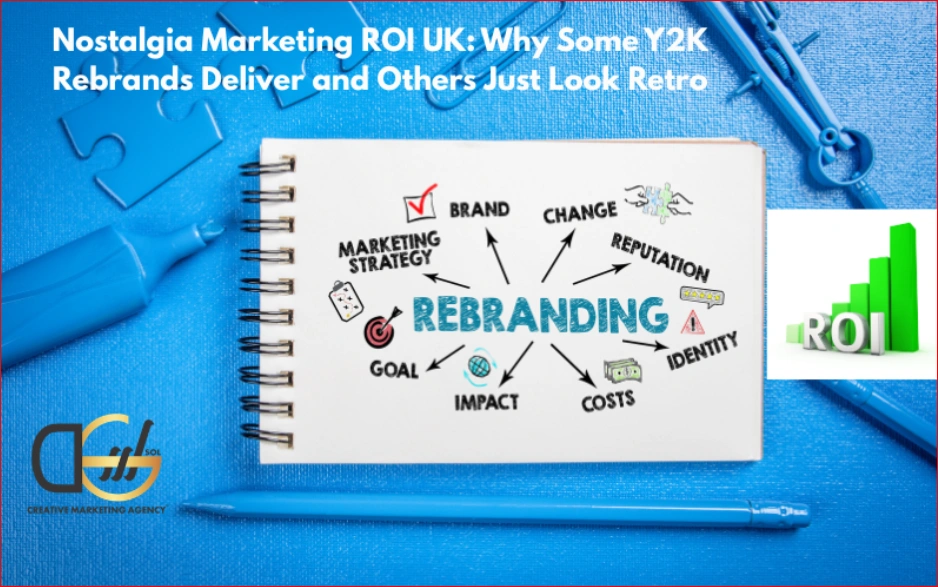
- Most nostalgia campaigns are judged on engagement, not commercial conversion
- The brands that achieve real return tie the aesthetic to a genuine product truth, not just a visual trend
- Choosing between depth and decoration is the decision that separates profitable nostalgia from expensive costume
Quick answer: The ROI of nostalgia marketing for UK brands depends entirely on how deeply the nostalgic element is anchored to the product, audience, and brand history. Aesthetic nostalgia alone, applying Y2K fonts and palettes to a brand with no connection to that era, delivers low return. Heritage-anchored nostalgia, reviving a genuine brand moment or product truth from the referenced period, consistently delivers measurable commercial results including higher conversion, stronger brand loyalty, and premium pricing acceptance.
Why Nostalgia Works as a Commercial Tool
The commercial effectiveness of nostalgia marketing is not based on sentiment alone when calculating nostalgia marketing ROI UK. It operates through several distinct psychological and behavioral mechanisms that are well understood by brand scientists and consumer psychologists.
The Emotional Shortcut
Nostalgia bypasses the rational evaluation stage that most purchasing decisions require. When a visual, sound, or product cue triggers a positive emotional memory, the consumer’s brain associates that positive feeling with the current product. The evaluation becomes emotional rather than analytical.
- Brands using nostalgia cues reduce the cognitive load required to form a positive brand association
- The emotional response is faster and more durable than a response built through rational persuasion alone
- This is why nostalgia campaigns often perform disproportionately well in attention-limited environments such as social video and out-of-home advertising
The Anemia Effect and Gen Z
Psychologists use the term anaemia to describe nostalgia for a time that the person experiencing it never actually lived through. This is particularly relevant for UK brands targeting Gen Z audiences with Y2K and 90s aesthetics.
- Gen Z, born between 1997 and 2012, did not experience Y2K as adults. Many were toddlers or not yet born
- Despite this, Y2K aesthetics consistently rank among the highest-performing visual styles for Gen Z brand engagement across TikTok and Instagram
- The attraction is not memory but aspiration. Y2K represents a pre-social-media simplicity that Gen Z romanticises rather than remembers
- Brands that understand this distinction can position Y2K visuals as aspirational rather than purely retrospective, widening the target audience beyond Millennials
What Separates High-ROI Nostalgia Campaigns from Aesthetic-Only Rebrands
The nostalgia trend has produced two very different outcomes across UK brands. Some have used it to deliver genuine commercial returns. Others have produced creative work that generated engagement but failed to shift purchasing behaviour or brand perception in any lasting way.
The difference is almost always traceable to one variable: whether the nostalgic element is connected to something real about the brand or product, or whether it is purely a visual overlay applied because the aesthetic is currently fashionable.
High-ROI Nostalgia: Heritage Anchoring
- A brand that was genuinely present and successful during the 90s or early 2000s can revive visual elements from that period with an authenticity that borrowed nostalgia cannot replicate
- Customers who remember the original version of the brand or product respond to the revival with genuine emotional recognition
- The product claim, not just the visual style, is reinforced. The nostalgia confirms something already believed about the brand
- Limited edition retro packaging revivals from brands with genuine heritage consistently outperform their standard packaging equivalents in short-term sales lift
Low-ROI Nostalgia: Costume Branding
- A brand with no connection to the Y2K era applying pixel fonts and chrome gradients to its identity is borrowing visual currency it has not earned
- Consumers, particularly those with actual memories of the period, detect the inauthenticity immediately
- Engagement metrics may be positive because the aesthetic is inherently eye-catching, but conversion and brand perception scores remain flat
- The brand has paid for a creative production without gaining any lasting equity from the investment, resulting in poor nostalgia marketing ROI UK.
Modern digital channels reveal a critical dynamic: how strategic brand identity choices directly influence audience engagement, search visibility, and the ultimate ROI of nostalgia campaigns, highlighting the growing importance of social media marketing for businesses in building authentic connections and driving long-term brand success.
Nostalgia Campaign Types and Their Commercial Performance Profile
The table below classifies nostalgia marketing approaches by strategic depth and maps each against its typical commercial performance outcome for UK brands to help forecast nostalgia marketing ROI.
| Campaign Type | Strategic Depth | Typical Commercial Outcome | Risk Level |
| Heritage pack revival | High | Measurable short-term sales lift | Low |
| Genuine era-specific mascot revival | High | Strong brand equity and loyalty gain | Low to Medium |
| Y2K aesthetic on heritage brand | Medium | Engagement lift, moderate conversion | Medium |
| Y2K aesthetic on new brand | Low | High engagement, low conversion | Medium to High |
| Pixel font and chrome rebrand with no era link | Very Low | Visual novelty only | High |
| Limited edition collab with era-authentic creator | High | Conversion and PR value | Low |
| Nostalgia-led product relaunch | High | Premium pricing acceptance | Low |
| Seasonal retro packaging with no product change | Medium | Incremental volume lift | Medium |
The ROI Framework: How to Evaluate a Nostalgia Marketing Investment
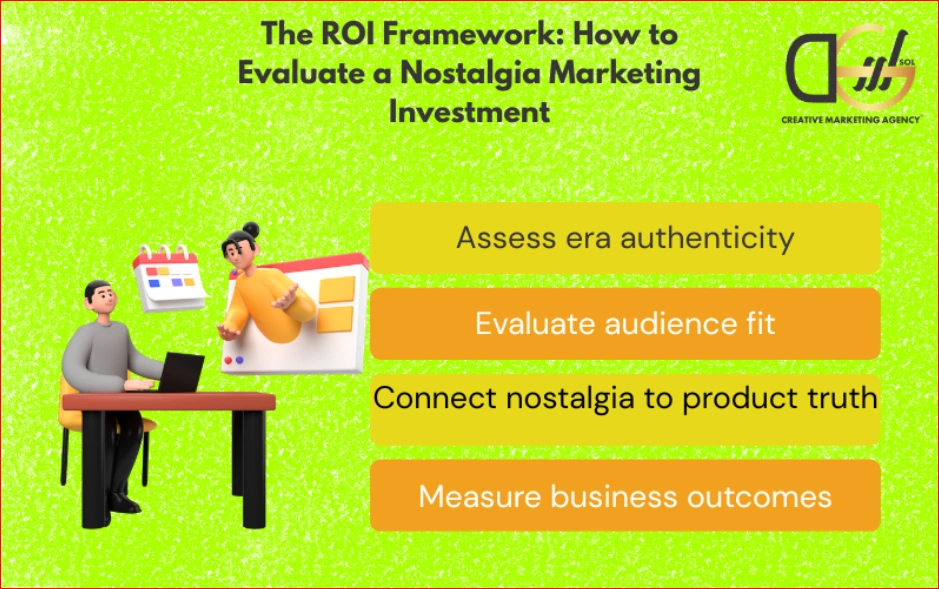
Before commissioning a nostalgia campaign, UK marketing teams should be able to answer four questions. The answers determine whether the investment is likely to deliver commercial return or produce creative work that performs well on an Instagram grid and nowhere else.
Question One: Does Your Brand Have Era Authenticity?
- Was your brand present and active during the period the visuals reference? If yes, you are working with genuine heritage. If no, you are working with borrowed aesthetic
- Brands with no authentic connection to the Y2K era can still use nostalgia effectively, but the mechanism shifts from heritage revival to cultural participation. The strategic execution is different
- Authentic heritage allows you to make product claims supported by historical evidence. Cultural participation requires a different creative rationale
Question Two: Is the Audience Old Enough to Remember, or Young Enough to Romanticize?
- The sweet spot for Y2K nostalgia is a dual audience: Millennials aged 28 to 42 who have genuine memories of the period, and Gen Z audiences who experience it as aspirational
- Campaigns that speak to both groups simultaneously tend to generate the widest organic reach because they are shared across generational networks
- A brand targeting over-45s primarily with Y2K aesthetics is misaligning the cultural reference with the audience demographic
Question Three: Is Nostalgia Tied to a Product Truth?
- The most commercially effective nostalgia campaigns use the aesthetic to reinforce a claim about product quality, heritage, or authenticity that the visual cues make credible
- Without this connection, the campaign produces emotional engagement that does not convert because there is no rational reason layered beneath the sentiment
- The visual is the entry point. The product truth is what closes the conversion
Question Four: What Are You Measuring Beyond Engagement?
- Nostalgia campaigns consistently produce strong engagement metrics. Likes, shares, and saves are easy wins for retroactively styled content
- The commercial ROI comes from tracking conversion uplift, average order value change, repeat purchase rate, and brand perception scores before and after the campaign
- If the measurement framework is engagement-only, the campaign will always appear to work regardless of commercial impact
Building a content and campaign strategy that connects creative direction to measurable business outcomes requires the same disciplined approach as any SEO program, and the principles in A Complete On-Page SEO Checklist to Boost Ranking apply equally to campaign content performance as to organic search.
What UK Brands Are Getting Right With Y2K in 2026
The nostalgia campaigns demonstrating the strongest commercial performance in the UK market in 2026 share a consistent set of characteristics. Understanding these patterns helps UK brands distinguish between what is working and what is performing only on the surface.
Product-Led Nostalgia
- Brands that have revived discontinued products alongside the retro visual treatment have generated the strongest conversion results. The aesthetics supported a genuine product story
- Food and drink brands in particular have used retro packaging to relaunch legacy flavours, with the packaging and the product working together as a single nostalgia signal
- The packaging and the product change occurred together. Neither alone would have delivered the same commercial lift or positive nostalgia marketing ROI.
Creator-Authentic Collaboration
- Brands that collaborated with creators who genuinely embody the Y2K era, either through authentic personal history or genuine cultural authority, outperformed those that contracted creators for reach alone
- Audiences on TikTok and Instagram can distinguish between a creator who has lived the aesthetic and one who is wearing it for a brand deal. The former drives conversion. The latter drives views
- The selection criterion for nostalgia campaign creators should be cultural credibility first, reach second
Limited Edition Scarcity
- Nostalgia campaigns structured around limited edition releases consistently outperform ongoing rebrand executions in terms of immediate conversion
- The scarcity dynamic compounds the nostalgic emotional pull. The audience is buying something rare and emotional simultaneously
- Limited edition also limits the risk. If the aesthetic does not convert at the expected level, the exposure is time-bound and the brand’s primary identity remains intact.
The Brands That Failed With Y2K and Why
For every successful nostalgia campaign, there is an equivalent that generated creative praise and delivered minimal commercial return. The pattern of failure is as consistent as the pattern of success.
Aesthetic Without Substance
- Brands that applied Y2K fonts and colour palettes to existing products and messaging without changing the product, the offer, or the story produced visual novelty with no commercial mechanism
- The audience responded with engagement because the visual was recognisable and appealing. They did not convert because there was no additional reason to purchase beyond the visual change
- Engagement without conversion is an expensive result for a creative investment
Mismatch Between Aesthetic and Audience
- B2B brands, financial services, and healthcare brands that adopted Y2K aesthetics without adjusting their audience targeting produced confused brand signals
- The aesthetic communicates playfulness, rebellion, and consumer-facing personality. When applied to a professional services brand without strategic context, it creates cognitive dissonance rather than positive emotional response
- Not every brand should use nostalgia aesthetics. The question of whether the aesthetic is appropriate for the brand and audience should precede any creative execution
Nostalgia That Predated the Audience
- Brands targeting audiences under 25 with 80s or early 90s visuals rather than Y2K references produced weaker results than brands using accurately targeted era references
- The emotional and aspirational mechanisms of nostalgia depend on the cultural reference being within the lived or romanticised experience of the target audience
- Getting the era right for the specific audience is not a detail. It is the entire premise of the campaign
Building Nostalgia Campaigns That Justify the Investment
The difference between a nostalgia campaign that generates genuine commercial return and one that produces only aesthetic engagement is a strategic planning decision made before the creative brief is written. Brand heritage analysis, audience-era alignment, product-truth identification, and commercial measurement framework design are all pre-creative decisions.
DGSOL UK works with UK brands on creative and digital marketing strategies that connect visual direction to measurable business outcomes. For nostalgia-led campaigns, this means interrogating the brand’s era authenticity, identifying the product truths that nostalgic visuals can credibly reinforce, and building measurement frameworks that track commercial impact rather than engagement alone.
For UK marketing teams navigating the pressure to adopt trend-led creative approaches while maintaining accountability for commercial results, DGSOL provides the strategic and creative capabilities to make nostalgia a genuine business tool rather than an aesthetic gesture.
Conclusion
Nostalgia marketing ROI UK brands can achieve from Y2K and 90s visual strategies varies enormously depending on how deeply the approach is anchored in brand authenticity and product truth. The aesthetic alone produces engagement. The aesthetic, combined with a genuine heritage story, a product revival, or a creator collaboration with real cultural credibility, drives conversions and lasting brand equity.
The brands that are winning with nostalgia marketing ROI UK conversations in 2026 are not those that borrowed the visual trend most effectively. They are the ones who identified what was genuinely worth reviving in their own brand history and gave their audience a commercial reason to respond. DGSOL UK helps UK brands make that distinction and build campaigns that deliver on both the creative and the commercial brief.
Contact DGSOL UK today to build a nostalgia marketing strategy that delivers measurable commercial return, not just creative applause.
FAQs
What is nostalgia marketing and how does it work commercially?
Nostalgia marketing uses past visual, sonic, or product references to trigger positive emotions. Commercially, it speeds up positive brand associations by linking products to the warmth, authenticity, and comfort of a specific era.
Which UK businesses benefit most from Y2K branding?
Consumer-facing brands (fashion, food, entertainment) targeting Gen Z or Millennials, and those with genuine 90s/2000s heritage, benefit most. B2B and professional services rarely see strong returns without major strategic adjustments.
How do you measure the ROI of a nostalgia marketing campaign?
Go beyond surface-level engagement metrics by tracking conversion rate uplift, average order value, and repeat purchase frequency. You must also measure shifts in brand perception scores before and after the campaign.
What makes a Y2K rebrand fail commercially?
Rebrands fail when they apply Y2K aesthetics decoratively without connecting them to a genuine product truth or brand heritage. This results in high social engagement but fails to drive actual conversions or commercial impact.
Is Y2K nostalgia effective for Gen Z audiences who did not experience the era?
Yes. Gen Z experiences “anemoia”—nostalgia for a time they never lived through—romanticising the pre-digital simplicity of the era. This aspirational appeal drives strong engagement and purchasing behavior.
How does DGSOL UK approach nostalgia marketing strategy for UK brands?
We start with deep brand heritage analysis and audience alignment before developing any creative briefs. This ensures visual aesthetics connect to genuine product truths, driving measurable commercial results alongside creative success.