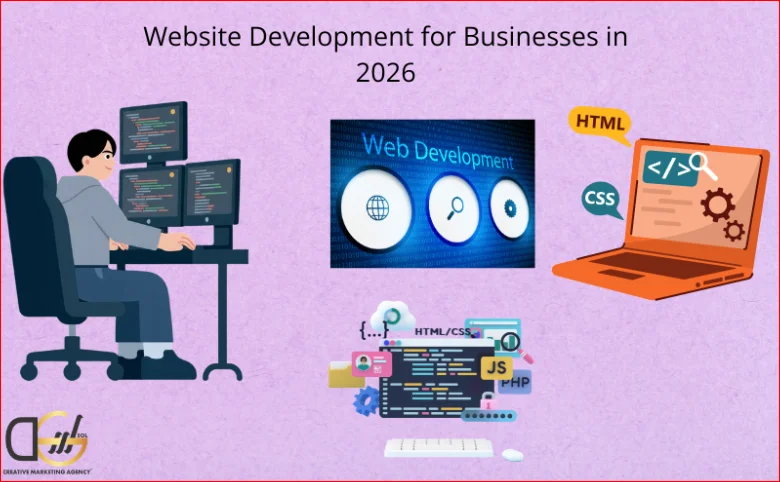
Quick Answer: Website development for businesses is the end-to-end process of planning, designing, building, and maintaining a website that supports clear business goals like leads, sales, and brand authority. A successful business site combines smart strategy, user-focused design, the right technology stack, and ongoing optimization, rather than just “pretty pages” online.
What Is Website Development for Businesses?
Website development for businesses is the structured process of turning your business strategy into a digital experience that attracts visitors and converts them into customers. It covers planning, UX and UI design, frontend and backend development, content creation, testing, launch, and ongoing improvement.
In a business context, the impact of web development goes beyond coding. It must:
- Support clear goals: leads, sales, bookings, demos, or sign-ups
- Reflect your brand positioning and value proposition
- Integrate with CRM, marketing automation, and analytics
- Comply with security, privacy, and accessibility standards
Modern business websites typically use a content management system (CMS) like WordPress or a headless stack. The key is to align technical choices with commercial objectives rather than chasing trends.
Main Components of Website Development
-
Planning & Strategy
- Define business goals, target audience, and website objectives.
- Create a sitemap, feature list, and user journey map.
-
Design (UX & UI)
- User Experience (UX): ensures easy navigation and intuitive flow.
- User Interface (UI): focuses on visual appeal, brand alignment, and responsive layouts.
-
Frontend Development
- Builds what users see and interact with using HTML, CSS, JavaScript.
- Ensures responsive design and interactive features.
-
Backend Development
- Manages servers, databases, CMS, and application logic.
- Handles functionality like user accounts, forms, and integrations.
-
Content Creation
- Copywriting, images, videos, and graphics aligned with business goals.
- SEO-friendly content to attract organic traffic.
-
Testing & Quality Assurance
- Check performance, speed, compatibility, and accessibility.
- Fix bugs and ensure smooth functionality before launch.
-
Launch & Deployment
- Publish the website on a live server.
- Configure analytics, SEO, security, and backups.
-
Maintenance & Optimization
- Regular updates, performance monitoring, and improvements.
- Continuous SEO, security patches, and feature enhancements.
Why Website Development Is Critical for Business Growth
Understanding the importance of website development in businesses helps justify investment to stakeholders. Your website is often the first—and sometimes only—touchpoint customers have with you.
According to a 2025 Adobe Digital Trends report, 70% of B2B buyers complete more than half of their research online before speaking to sales. If your site is slow, outdated, or unclear, you are losing deals before you even know they exist. DGSOL is your only choice at this stage.
Effective website development supports growth by:
- Building trust and authority: Professional design and clear messaging signal credibility.
- Generating leads 24/7: Optimized landing pages, forms, and chat capture demand around the clock.
- Reducing sales friction: Educational content answers objections before a call.
- Improving marketing ROI: Every campaign performs better when it lands on a strong website.
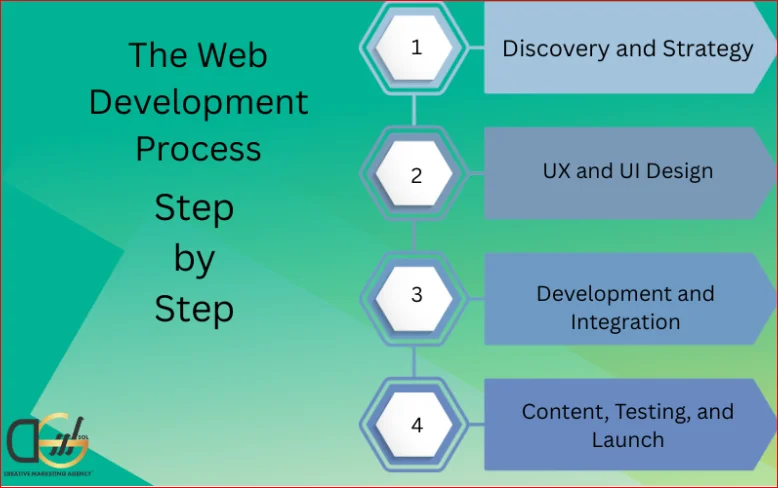
The Web Development Process Step by Step
A predictable web development process helps businesses avoid scope creep, delays, and disappointing outcomes. Here is a practical breakdown.
1. Discovery and Strategy
This phase clarifies what the website must achieve.
- Define business goals and KPIs (e.g., demo requests, quote forms)
- Profile target audiences and their pain points
- Map user journeys from first visit to conversion
- Audit existing site and competitor benchmarks
Output: sitemap, feature list, content plan, and success metrics.
2. UX and UI Design
UX (user experience) ensures the site is intuitive; UI (user interface) ensures it is visually aligned with your brand.
- Create wireframes for key templates (home, services, blog, contact)
- Design responsive layouts for mobile, tablet, and desktop
- Focus on scannable content, clear headings, and obvious calls-to-action
At this stage, conversion-rate best practices and SEO-friendly web structure (heading hierarchy, internal links) should be built in.
3. Development and Integration
Developers turn designs into a functioning website.
- Front-end: HTML, CSS, JavaScript for layout and interactions
- Back-end: CMS setup, databases, user management, APIs
- Integrations: CRM, email marketing, booking systems, payment gateways
Clean, maintainable code and performance optimization (image compression, caching, Core Web Vitals) are crucial for SEO and user satisfaction.
4. Content, Testing, and Launch
Content and quality assurance make the difference between “it works” and “it performs.”
- Write and upload optimized copy, images, and video
- Test forms, navigation, mobile views, and page speed
- Check accessibility (contrast, alt text, keyboard navigation)
- Configure analytics, conversions, and search console
Only after these checks should you deploy to live hosting and monitor the first weeks closely.
Essential Tools and Technologies for Web Development
Choosing the right tools and technologies for web development can reduce long-term costs and technical debt.
Core Technology Stack
- CMS: WordPress, Webflow, or headless (Strapi, Contentful) depending on complexity
- Front-end: HTML5, CSS3, JavaScript frameworks like React or Vue (if needed)
- Back-end: PHP (WordPress), Node.js, or .NET for more complex systems
- Database: MySQL, PostgreSQL, or managed cloud options
Supporting Tools
- Design: Figma or Adobe XD
- Analytics: Google Analytics 4, Google Search Console
- SEO: Screaming Frog, Ahrefs, or Semrush
- Collaboration: Jira, Trello, or Asana
For small to mid-sized businesses, a modern WordPress stack with a reputable theme framework and minimal plugins is often the most efficient mix of flexibility, cost, and maintainability.
Website Development Cost: What Businesses Should Expect
| Website Type | Typical Cost (GBP) | Best For |
| Small Business Website | £1,500 – £6,000 | Local businesses, startups, service providers |
| Portfolio / Personal Website | £500 – £500,0 | Freelancers, creatives, professionals |
| Content / Blog Website | £500 – £2,000 | Bloggers, niche content creators, publishers |
| E-commerce Website | £1,500 – £35,000+ | Online stores, product-based businesses |
| Custom Web Application | £10,000 – £100,000+ | Enterprises, SaaS platforms, advanced business solutions |
Website development costs vary widely depending on scope, custom features, and your team’s experience. Instead of chasing a single number, think in tiers.
Expert Insights and Real-World Lessons
In my experience auditing underperforming business sites, three recurring mistakes appear:
- No clear primary action: Pages lack a single, prominent call-to-action, so users do nothing.
- Content created for keywords, not people: Walls of text that technically “target” terms but do not answer real questions.
- Ignoring post-launch optimization: Teams treat launch as the finish line instead of the starting point for testing and iteration.
Businesses that win treat their website as a living product: they review analytics monthly, A/B test key pages, and align sales and marketing feedback with continual improvements.
DGSOL UK web developers give outstanding performance to build a high ranked business website. From website design and development to ongoing support, we ensure your site performs flawlessly across all devices.
How DGSOL UK Web Developers Help You in Your Business Growth
DGSOL UK is a leading web development company delivering custom, brand-focused websites that are responsive and user-friendly. Our services include intuitive CMS integration like WordPress and SEO-friendly designs to boost your online visibility. We serve in
Custom Website Design
- Mobile-first, brand-aligned, conversion-focused layouts
- Intuitive navigation and responsive design
Frontend & Backend Development
- HTML5, CSS3, JavaScript, PHP
- CMS integration (WordPress, Shopify)
- Clean, maintainable, scalable code
E-Commerce Development
- Shopify, WooCommerce, Magento
- Mobile-optimized product pages and payment gateways
- SEO-friendly listings
Website Optimization
- Fast load times, image compression, code minification
- Core Web Vitals compliance, Google PageSpeed 90+
SEO-Friendly Development
- On-page SEO, meta tags, keyword integration
- Schema markup for better SERP visibility
Ongoing Support & Maintenance
- 24/7 technical support
- Regular updates, security patches, monthly performance reports
So, we are here to hear from you for your business growth.
Conclusion & Next Steps
Website development for businesses is ultimately about building a digital asset that earns attention, trust, and revenue.
- Clarify business goals and user needs before writing a single line of code.
- Follow a structured process from discovery to post-launch optimization.
- Choose tools and a tech stack that match your long-term plans.
- Invest in ongoing improvements, not just a one-time build.
As a next step, audit your current website against the stages in this guide and identify the single biggest bottleneck. Fixing that one issue often unlocks disproportionate gains in leads and sales.
FAQs
What is website development in business terms?
Website development in business terms is the structured process of planning, designing, building, and maintaining a site that directly supports goals like leads, sales, and customer service. It combines strategy, UX/UI design, coding, content, and analytics to turn web traffic into measurable commercial outcomes.
How long does it take to develop a business website?
A typical small business website takes 3–6 weeks from discovery to launch, assuming fast feedback and limited custom features.
Which is better: custom development or templates?
For most SMEs, high-quality templates customized by professionals offer the best balance of speed and cost. Fully custom builds are ideal when you need unique functionality, complex integrations, or strict brand differentiation.
How much should a small business spend on a website?
Many small businesses in the UK invest between £750 and £3500 on a professionally developed site, plus ongoing hosting, maintenance, and marketing.
How does web development affect SEO and rankings?
Web development directly impacts SEO through site speed, mobile responsiveness, code quality, information architecture, and structured data.