According to recent market analysis, the global Low Code Development Platform market is projected to reach USD 48.91 billion in 2026 and surge to USD 376.92 billion by 2034, driven by a compound annual growth rate of 29.10%. As businesses shift toward automated digital transformation, the market is expected to grow rapidly.
What is No-Code?
No-code is a development approach that allows anyone, regardless of technical background, to build fully functional applications using a purely visual interface. In 2026, this is often called “Natural Language Development,” where you describe your app’s needs to an AI assistant that handles the backend.
- How it works: You use drag-and-drop components, pre-defined templates, and visual logic builders.
- The Goal: Total democratization of software creation.
- Target User: “Citizen Developers”: marketers, HR managers, and entrepreneurs.
What is Low-Code?
Low-code is a “middle ground” that combines visual building with the ability to inject custom code. It is designed to speed up professional developers by automating 80% of repetitive coding tasks (such as database setup or UI scaffolding) while leaving the remaining 20% open for manual optimization.
- How it works: Visual tools handle the bulk of the work, but you can open a “code window” to write custom JavaScript, Python, or SQL for complex integrations.
- The Goal: Extreme development velocity without sacrificing technical depth.
- Target User: IT professionals and software engineers.
Low-code and no-code tools help you build a content marketing plan from a static document into a high-speed, automated engine. They help you bridge the gap between “having an idea” and “executing at scale.”
When to Use Low-Code vs. No-Code?
Choosing between the two depends on your project’s complexity and your team’s skill set.
| Feature | Choose No-Code If… | Choose Low-Code If… |
| Complexity | You need a simple landing page, internal tool, or basic MVP. | You are building mission-critical enterprise apps or complex SaaS. |
| Integrations | You only need standard connections (e.g., Stripe, Mailchimp). | You need to connect to legacy databases or custom internal APIs. |
| Customization | Standard design and logic templates are enough. | You need a highly unique UI or specialized performance tuning. |
| Speed | You need to launch in hours or days. | You need to launch in weeks but stay scalable for years. |
| Security | You rely on the platform’s built-in security. | You need granular control over data encryption and governance. |
Best Code or No-Code Platforms in 2026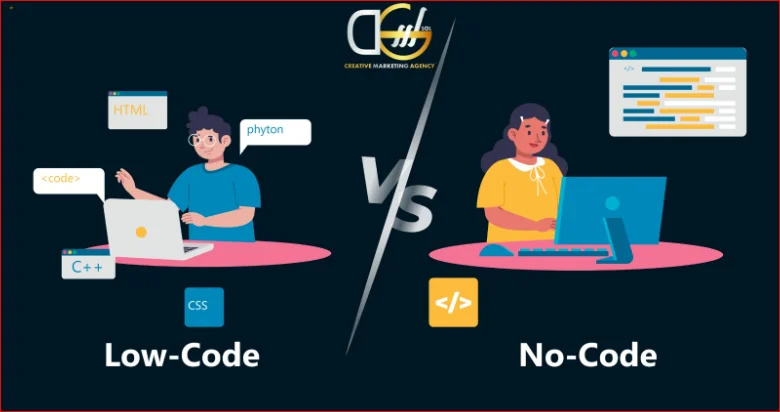
Top No-Code Platforms
- Bubble: The powerhouse for complex web apps; allows for deep logic without a single line of code.
- Glide: Best for turning spreadsheets (Google Sheets/Airtable) into beautiful mobile-friendly apps in minutes.
- Softr: The fastest way to build client portals and internal dashboards on top of Airtable.
- Adalo: Specifically designed for “native-feel” mobile apps with App Store publishing.
Top Low-Code Platforms
- FlutterFlow: Builds high-performance native apps using Google’s Flutter framework; allows for full code export.
- Mendix: An enterprise favorite for building mission-critical apps with heavy IT governance.
- Appian: Focuses on process automation and “human-in-the-loop” workflows for large corporations.
- WeWeb: A front-end builder that connects to any backend (like Xano or Supabase), perfect for scalable web products.
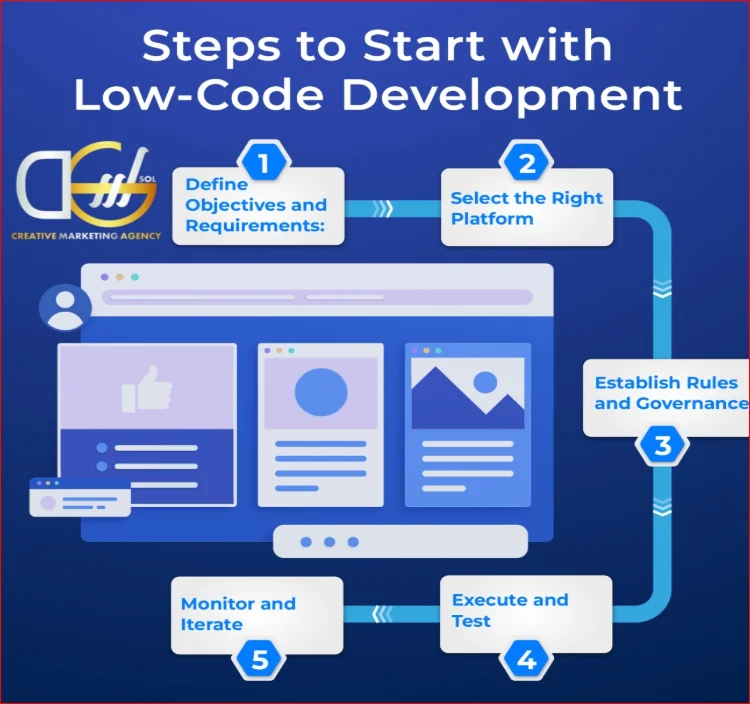
Steps to start with No-Code And Low-Code Development
Getting Started with No-Code
- Define Your Goal: Identify the exact workflow you want to automate or the app you want to build.
- Understand Basic Logic: Grasp simple relational databases and “If/Then” automation rules.
- Pick the Right Tool: Choose based on need (e.g., Airtable for data, Zapier for automation, Webflow for websites).
- Use Templates: Start with a pre-built template and reverse-engineer it rather than building from scratch.
- Build and Connect: Customize the interface and integrate it with your daily apps (Gmail, Slack, etc.).
- Launch and Tweak: Deploy to a small group, get feedback, and make visual adjustments.
Getting Started with Low-Code
- Assess Architecture Needs: Outline the requirements for complex, secure internal tools or dashboards.
- Learn Coding Basics: Grasp foundational SQL, APIs (JSON), and basic JavaScript.
- Choose a Platform: Select an enterprise-ready platform like Retool, Appian, or Microsoft Power Apps.
- Connect Data Sources: Securely link the platform to your company’s existing databases or REST APIs.
- Combine Visuals with Code: Drag-and-drop the user interface, then write custom code for complex queries or logic.
- Test Rigorously: Conduct rigorous quality assurance, with a strong focus on data security and user permissions.
Why Global Businesses are Pivoting to “Code-Lite” Models
- Talent Scalability: Companies no longer need to wait six months to hire a senior engineer for a simple mobile app development project.
- Reduced Technical Debt: Standardized blocks in no-code development lead to fewer manual bugs and easier updates.
- Market Agility: The ability to pivot a digital marketing strategy and launch a supporting web tool in 48 hours is the new competitive baseline.
Key Technological Pillars of 2026
1. AI-Driven Automation and On-Page SEO
In 2026, no-code development is inseparable from Artificial Intelligence. Modern social media platforms automatically generate on-page SEO structures as you build. From schema markup to image alt-text optimization, the AI ensures that your custom website design is search-ready from the moment of deployment.
2. Sophisticated Cross-Platform App Development
The barrier between web and mobile has vanished. Using low-code solutions, businesses can now execute cross-platform app development that delivers native performance on both iOS and Android from a single visual canvas. This allows for deeper integration with social media marketing APIs, facilitating real-time user engagement and data collection.
3. Enterprise Security and Governance
Early skepticism regarding the security of “ready-made” code has been addressed. Modern low-code platforms offer “SOC2 Type II” compliance by default. For companies investing in technical SEO services and data-heavy applications, these platforms provide a secure, scalable foundation that handles millions of requests without breaking.
The DGSOL Advantage: Strategic Implementation over Tool Choice
At our Marketing Agency, our experience in search engine optimization and digital architecture has shown us that the tool is only as good as the strategy behind it. A common mistake we see is “Feature Creep”—building a complex app just because the tool makes it easy, without considering the user journey.
Internal Insight from DGSOL Experts: > “In 2026, the value is no longer in the ‘build’—it’s in the ‘optimization.’ We leverage data-driven digital strategies to ensure that every no-code project is underpinned by rigorous keyword and competitor research. We don’t just build a site; we build a lead-generation engine.”
By integrating SEO content writing and performance marketing into the initial development phase, we ensure your brand doesn’t just exist online—it dominates the organic search rankings.
Maximizing ROI: A 2026 Action Plan
To thrive in the current digital economy, follow these sustainable business development steps:
- Prioritize Mobile-First Architecture: With mobile traffic accounting for over 70% of the global market, ensure your Android app development or web project is optimized for “Thumb-Friendly” navigation.
- Focus on Content Depth: Search engines in 2026 reward E-E-A-T (Experience, Expertise, Authoritativeness, and Trustworthiness). Use SEO content writing to provide genuine value, not just keyword stuffing.
- Invest in Technical SEO Services: Even a no-code site needs a clean sitemap, fast server response times (Core Web Vitals), and secure HTTPS protocols.
- Leverage Social Media Integration: Ensure your platform supports seamless tracking of social media marketing metrics (Pixels, API conversions) to accurately measure your ROI.
Conclusion and Next Step
Building an app is easy; building an app that ranks on Google and converts UK leads is difficult. Our team at DGSOL combines the speed of no-code and low-code development with the strategic depth of a top-tier SEO and Marketing Agency. We ensure your digital assets are not just functional, but are powerful revenue drivers.
Ready to accelerate your digital growth? Contact Us Today for a custom low-code strategy session.
FAQs
- Will no-code tools hurt my search engine optimization?
No. In 2026, most top-tier no-code platforms prioritize on-page SEO. However, you still need a specialist SEO service to manage keyword strategy and backlink profiles.
- Is it possible to migrate from no-code to traditional code later?
Yes. Many low-code platforms now allow for “Code Export,” giving you the flexibility to move to a custom server if your traffic scales massively.
- What is the most cost-effective way to launch an app in 2026?
Cross-platform app development with low-code tools is generally the most cost-effective, reducing development hours by up to 60% compared to native coding.
- Can no-code handle high-volume organic traffic?
Absolutely. Platforms like Webflow and Bubble are now used by global enterprises to manage millions of visitors monthly without downtime.
- How does DGSOL approach keyword and competitor research?
We use a data-driven approach with advanced AI tools to identify gaps in your competitors’ strategies, allowing us to position your SEO services for maximum visibility.
- Does your company offer custom website design for specific niches?
Yes. We specialize in tailored website design and development that aligns with your specific industry’s user behavior and conversion goals.
- Is technical SEO included in DGSOL’s development packages?
Every project we touch includes foundational technical SEO services to ensure your site is indexable, fast, and secure from day one.