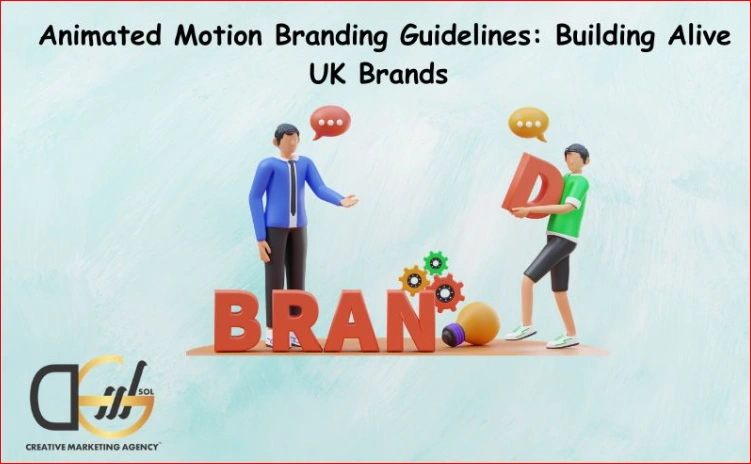
- Motion assets must be consistent across every platform, or they actively damage brand recognition
- Guidelines need to define timing, easing, loop behaviour, and accessibility compliance
- Most UK brands have a visual identity system but no motion equivalent
Quick answer: Animated motion branding defines how your brand moves, not just how it looks. They cover animated logo variants, transition rules, micro-interaction behaviour, timing and easing standards, and platform-specific format requirements. Without them, motion assets become inconsistent across teams and tools. Building them now positions any UK brand ahead of competitors still working from static-only identity documents.
Why Static Brand Guidelines Are No Longer Enough
A traditional brand guidelines document covers logos, colors, typography, photography style, and tone of voice. It was built for a world where brand assets lived primarily on print, web pages, and display advertising. That world has not disappeared, but it now shares space with a video-first environment that a static document cannot address.
Consider what happens when a junior designer needs to create a LinkedIn animation for a product launch. The brand guidelines show them the logo, the color codes, and the typeface. They tell them nothing about how fast the logo should animate in, what easing curve to use, whether it should loop, or how to adapt it for a six-second format. The result is a motion asset built on instinct, not brand standards.
- Every team member who creates motion content without a framework produces a slightly different interpretation
- Agencies briefed on animation work without motion guidelines produce assets that look correct at rest but feel wrong in motion
- Accumulated inconsistency across platforms erodes the recognition that a brand has spent years building
The Core Components of a Motion Brand Guidelines Document
A motion brand document is not a single file. It is a system. The following components are the minimum any UK business needs to cover before motion assets are produced at scale.
Animated Logo Variants
- A full-length version (typically three to five seconds) for intros, presentations, and hero video
- A short version (one to two seconds) for social media ads, email headers, and app loading screens
- A loop version for digital signage and display environments where the animation runs continuously
- A still frame, the approved freeze point of the animation that can be used where motion is not supported
Easing and Timing Standards
- Easing refers to how an element accelerates and decelerates during an animation. Different easing curves produce dramatically different brand personalities
- An ease-in curve (slow start, fast finish) feels urgent and assertive
- An ease-out curve (fast start, slow finish) feels settled and confident
- Custom cubic bezier curves allow brands to define a motion signature that is as distinctive as a typeface
- Duration standards prevent team members from making intuitive timing decisions that diverge from the brand feel
Transition Rules
- Defines how brand elements enter and exit within a layout, whether through fade, slide, scale, or morphing transitions
- Prevents contradictory motion languages appearing in the same piece of content
- Covers both full-screen transitions between scenes and element-level transitions within a single frame
Micro-Interaction Standards
- Micro-interactions are small, purposeful animations triggered by user actions: a button press, a form submission, a navigation hover
- On websites, apps, and interactive digital signage, these define how the brand responds to the user, not just how it presents itself
- Without standards, micro-interactions become a collection of developer preferences rather than a brand statement
Platform-Specific Motion Requirements in 2026
A single animated logo file does not work across all the environments where UK brands now need motion. When executing Social Media Marketing For Businesses, each platform has specific technical requirements that must be addressed within the guidelines document itself.
| Platform | Recommended Format | Duration | Key Consideration |
| TikTok | MP4 (H.264) | 3 to 6 seconds | style= “border:1px solid black; padding:9px;”No sound dependency; legible at 9:16 |
| MP4 or GIF | 3 to 15 seconds | Autoplay muted; text must carry meaning | |
| Digital Signage | Lottie / MP4 loop | Looping | Seamless loop point; no text dependency |
| Website (UI) | Lottie / CSS / SVG | 0.2 to 0.8 sec | Reduced motion OS preference compliance |
| Email Header | GIF (fallback PNG) | 2 to 4 seconds | Under 1MB; Outlook falls back to still |
| Presentation | MP4 or embedded GIF | 3 to 5 seconds | Works without autoplay; intro only |
Technical format knowledge within the guidelines prevents motion assets from being produced in the wrong file type, at the wrong resolution, or with the wrong loop behavior for a specific platform. This saves significant revision time across every production cycle.
Accessibility and the EU Accessibility Act: What Motion Guidelines Must Address
The European Accessibility Act came into force in June 2025, requiring digital products and services sold into the EU market to meet specific accessibility standards. For UK businesses operating in both markets, this creates a practical obligation to consider accessibility within motion design standards.
The Reduced Motion Preference
- Operating systems including iOS, Android, Windows, and macOS allow users to set a reduced motion preference
- Web and app animations should detect this preference and either reduce or remove motion for users who have set it
- The guidelines document should specify which animations are essential (and therefore require a reduced-motion alternative) and which are decorative (and therefore should be suppressed entirely)
Flicker and Seizure Risk
- Animations that flash more than three times per second can trigger photosensitive epilepsy
- The guidelines must set an explicit maximum flash rate and prohibit strobe-like effects from brand motion assets
- This is not just a legal consideration. It is the basic standard of responsible design
Color and Contrast in Motion
WCAG 2.1 contrast requirements apply to animated text and UI elements as much as static ones. If a brand’s motion design includes kinetic typography or text overlays, the contrast ratios during animation must meet the same standards as static text. The guidelines document should address this explicitly.
For UK businesses building their digital presence, understanding how accessibility intersects with content strategy and search visibility is important. It is essential to keep the On-Page SEO Checklist alongside to boost ranking as it includes technical content standards, including accessibility, directly affect search performance.
Applying Motion Guidelines Across TikTok, LinkedIn, and Digital Signage
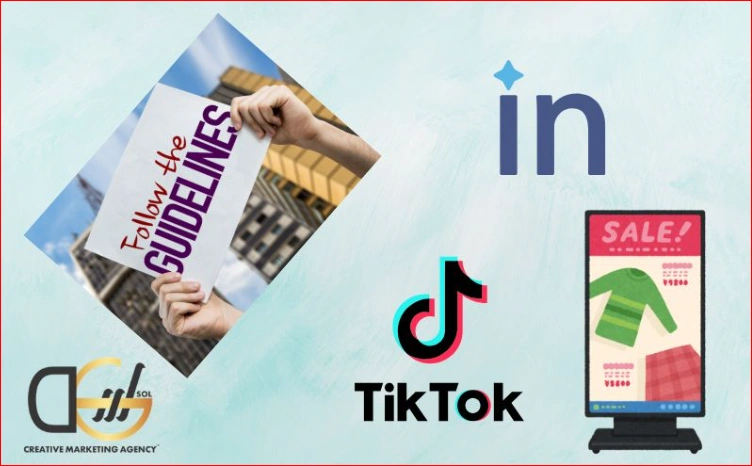
Each platform treats motion differently, and the guidelines need to reflect those differences through practical format-specific rules rather than abstract principles.
TikTok
- Vertical 9:16 is the native format. The animated logo and any motion-led content must be built for this orientation from the start, not adapted from a 16:9 master
- The first one to two seconds determine whether a viewer continues watching. Motion should front-load brand recognition, not build slowly toward it
- Sound-off viewing is standard. Any motion asset that relies on audio to carry the brand message is incomplete as a TikTok asset
- Looping is a native behaviour on TikTok. Animations that have a clean loop point perform better than those with abrupt endings
- LinkedIn’s audience is professional and typically more conservative in response to motion than a TikTok audience
- Subtle, purposeful animation performs better than high-energy motion on this platform. The easing curves specified in the guidelines should reflect this
- Document carousels and banner animations are the most common motion contexts on LinkedIn for B2B brands
- Autoplay is muted by default. Every frame of any motion asset must carry brand value without audio
Digital Signage
- Digital signage environments require looping assets without a visible restart point
- Content is typically viewed by a passing audience with three to ten seconds of attention at most
- Motion on signage must convey the brand message before the viewer is out of range. This means the brand mark, key message, and any call to action must land within the first two seconds
- Lottie files are the preferred format for signage systems that support them, offering vector quality at small file sizes with full loop control
Building Motion Guidelines on a Realistic UK Business Budget
One of the reasons most UK businesses do not have motion guidelines is the assumption that producing them is expensive. In practice, the cost of not having them, measured in inconsistent assets, rework cycles, and agency briefing failures, consistently exceeds the cost of producing them.
Phase 1: The Animated Logo (Core Asset)
- Commission an animated version of the existing logo in three variants: full, short, and loop
- Delivered as Lottie (JSON), SVG, and MP4 to cover all platform requirements
- Define the easing, timing, and brand rationale for the chosen motion behaviour in a simple brief document
- Cost range for UK agencies: variable by complexity, but this is a one-time investment that amortises across every future motion asset produced
Phase 2: The Motion Standards Document
- A written document defining timing standards, easing curves, transition rules, and platform-specific guidance
- Includes accessibility requirements and approved reduced-motion alternatives
- Delivered alongside the animated logo assets so both are available from the same point in the project
Phase 3: Template Assets
- Produce two or three motion templates in the most frequently used formats: a LinkedIn banner animation, a TikTok intro card, and a digital signage loop
- These give internal teams and agencies a working reference that is faster to brief and produces more consistent output than a document alone
Why a Motion-Ready Creative Partner Matters
Producing animated motion branding guidelines requires a team that understands both brand identity and the technical requirements of modern motion environments. Most traditional graphic design briefs do not include motion format knowledge, easing curve documentation, or accessibility compliance within their scope.
DGSOL UK works with businesses across the UK on brand identity systems that extend beyond static visual standards into motion-ready deliverables. The approach covers animated logo variants, platform-specific format guidance, and practical guidelines documentation that internal teams can actually use without needing a motion design background.
For UK businesses at the point of brand refresh or digital marketing expansion, DGSOL UK provides the creative and strategic capability to make motion a coherent part of the brand system rather than an afterthought produced inconsistently by different teams on different briefs.
Conclusion
Animated motion branding guidelines are not a future consideration for UK businesses. They are an active gap in most existing brand identity systems, and competitors who close that gap first will hold a visible advantage across every platform where attention is fought for in seconds.
The guidelines do not need to be complex. They need to be complete: animated logo variants with defined timing and easing, transition rules, platform-specific format requirements, micro-interaction standards, and accessibility compliance. Built correctly, they become the motion layer of a brand system that ensures every moving asset, wherever it appears, feels like it belongs to the same identity. DGSOL can help you build that system, one that moves with the same precision and intention as the brand it represents.
Contact DGSOL UK today to build your motion branding guidelines and make your brand impossible to ignore in motion.
FAQs
What are animated motion branding guidelines?
They are the motion equivalent of a traditional brand guidelines document. They define how a brand moves across platforms: covering animated logo variants, easing and timing standards, transition rules, micro-interactions, platform formats, and accessibility requirements.
Why does a UK business need motion guidelines in 2026?
Because most brand touchpoints now involve video or animation. TikTok, LinkedIn, digital signage, website UI, and email headers all require motion assets. Without guidelines, these assets are produced inconsistently and erode brand recognition over time.
What is easing and why does it matter for brand motion?
Easing defines how an animation accelerates and decelerates. Different easing curves produce different emotional responses: aggressive, confident, playful, or precise. Specifying custom easing curves in the guidelines gives a brand a motion signature as distinctive as its typeface.
Does motion design need to comply with accessibility standards?
Yes. The EU Accessibility Act and WCAG 2.1 both apply to motion in digital products. Guidelines must address the reduced-motion OS preference, maximum flash rates, and contrast requirements for animated text elements.
How long does it take to produce motion brand guidelines?
A foundational motion guidelines document alongside three animated logo variants can typically be produced within four to six weeks. Adding platform-specific templates extends the timeline but reduces ongoing production time for every subsequent motion asset.
How does DGSOL UK approach motion branding for businesses?
We build motion brand systems that extend existing visual identities into animated and video-first environments. This includes animated logo production, platform-specific format guidance, and a practical guidelines document that gives internal teams and agencies a clear, usable framework for all future motion work.